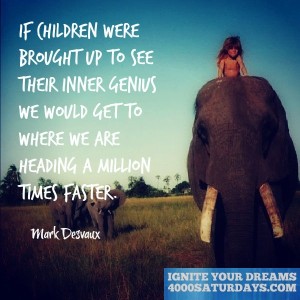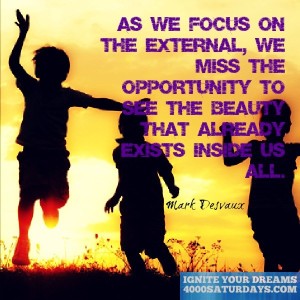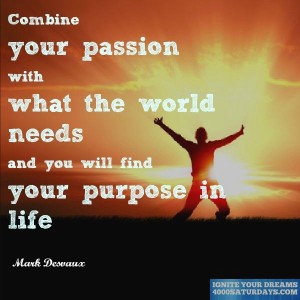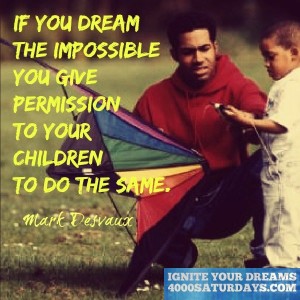
I love the randomness of having a two year old toddler in the house. Life is just one big adventure and we get to re-live it with them. Then suddenly we remember that we don’t have to re-live, we just need to start living it again. The world through the eyes of a child is the real world. Us grown-ups? We just forgot how to be in awe of the ‘every day’ marvels around us.
Mar 24
Blue Pill or Red Pill? Documentaries That Changed the World
In the film The Matrix there is a defining moment where the lead character Neo is offered either a blue pill or red pill. They have become pop culture terms that represent a common symbol for the choice between the blissful ignorance of illusion (blue) and embracing the sometimes painful truth of reality.
In 1991, I started to read hundreds of books and listened to countless audio on personal development, motivation, life purpose, human potential, mortality, and the fear of death, spirituality, gratitude and happiness. I quickly became struck by how amazing (and amazingly complex) we are as a human race, and also the untapped potential we all have.
In 2005, as part of a documentary I was filming, I started to research themes ranging from the environment and climate change, the money system, peak oil, food security and world population. I read every book I could find, watch every documentary and TV show, attended many seminars, whether a local transition town meeting to a public lecture at Cambridge University.
I was privileged to interview some of the world’s leading experts on these subjects. It became a personal journey of discovery, joining the dots on all these different themes from human potential to environmental disaster. At times it left me wholly confused, and other times totally empowered to make change on the biggest possible scale. Without realising it, I had taken the blue pill. The way I saw the world had changed forever.
Recently a very good friend asked if I could put together a list of the most compelling films I have seen which can be shared with others wishing to also plunge below the superficial level which we typically all swim day-to-day. When most people drive a car, they have no idea how it works. They know which pedals to push and how to turn the wheel. If you want to get from A to B that is all you need to know. If you are one of those people who doesn’t want your life to simply be about the destination, it’s time to take the plunge. What I found through the rollercoaster journey I have been on (so far) is that hiding in amongst the sea of information and knowledge is a potential life purpose – something to dedicate your time, energy and effort to try to make a real difference along your journey.
So where to start? Right here:
DOCUMENTARIES THAT CHANGED THE WORLD
FOOD
FOOD INC
As a young child, like most kids, I might find a sweet on the floor and put it in my mouth, only to hear one of my parents shouting at me to “spit it out – you don’t know where it’s come from!”
As an adult, I realised I still hadn’t learnt that lesson. Food is a pretty much as fundamental as it gets. It is one of the few things we can all understand, and for me, it is the start of any exploration into the state of our world today.
This 2010 Oscar-nominated documentary, unwraps the cellophane on the food industry and takes you on the journey from seed to plate. It’s compelling, it’s shocking and you’ll come away wanting to grow your own.
An essential film which help me change the way I look at food, and as a result make more informed decisions.
9/10
Synopsis:
Where does the food we purchase really comes from, and what it means for the health of future generations? By exposing the comfortable relationships between business and government, Food Inc gradually shines light on the dark underbelly of the food industry. As chicken breasts get bigger and tomatoes are genetically engineered not to go bad obesity levels are skyrocketing, and adult diabetes has reached epidemic proportions. Perhaps if the general public knew how corporations use exploited laws and subsidies to create powerful monopolies, the outrage would be enough to make us think more carefully about the food we put into our bodies.
THE END OF THE LINE
It easy for us to see how the world has changed as we go about our daily business, but when it comes to the sea, it is something we can remain largely ignorant about, unless you live in a fishing port. For me, The End of the Line is not only a brilliant insight into the fishing crisis, but also essential viewing along with the other films listed here to demonstrate just how everything in our world is connected.
8/10
Synopsis:
As the world’s demand for fish and other seafood increases and the technology available to commercial fisherman becomes more sophisticated, the annual harvest from global seaports has grown tremendously in recent years. However, the rise of industrialised fishing has not come without consequences, and many environmentalists and oceanographers believe that the current demand for fish and the methods used to fulfil it are taking an irreparable toll on the world’s oceans, with some speculating that the seas could be literally fished-out by 2048 if current trends do not change. Filmmaker Rupert Murray offers an in-depth look at the crisis in the world’s oceans in the documentary THE END OF THE LINE, in which experts discuss some of the key factors behind the looming shortage — increased demand for endangered species, irresponsible methods employed by major fishing lines, lax enforcement of current regulations — and what can be done to head off the famine before it’s too late.
THE VANISHING OF THE BEES
Think of bees and food and you instantly think ‘honey’. Think again. Did you know bees are responsible for pollinating 80% of all food plants? There is a crisis with the bee population which has declined dramatically in the last sixty years. We owe a lot to bees because without their hard work we could say goodbye to apples, almonds, blueberries, peppers, pumpkins, avocados, cucumbers, kiwis, broccoli, alfalfa, cotton, citrus, soya beans, onions, broccoli, carrots, sunflowers, melons, cherries – the list goes on. We would be left with wheat, rice, corn and maybe pineapples and bananas. If bees disappear, most fruits, vegetables, and flowers would disappear with them.
This documentary was one of the reasons I took up beekeeping. Talk to most beekeepers and it’s all about how much honey they get each year from their colonies. I discovered that through caring for a colony of 80,000 bees, I get a privileged, fascinating and unique window into our world and our environment. Their collective intelligence is beyond our understanding. I don’t like to think of myself as a bee ‘keeper’, but a bee guardian. They are not mine to keep, but an essential part of our ecosystem and something we should care for if we care to have food on our tables each day.
9/10
Synopsis:
This documentary takes a piercing investigative look at the economic, political and ecological implications of the worldwide disappearance of the honeybee. The film examines our current agricultural landscape and celebrates the ancient and sacred connection between man and the honeybee. The story highlights the positive changes that have resulted due to the tragic phenomenon known as “Colony Collapse Disorder.” To empower the audience, the documentary provides viewers with tangible solutions they can apply to their everyday lives. Vanishing of the Bees unfolds as a dramatic tale of science and mystery, illuminating this extraordinary crisis and its greater meaning about the relationship between humankind and Mother Earth. The bees have a message – but will we listen?
A FARM FOR THE FUTURE
You don’t need to have an interest in farms or farming to get this documentary. It’s about what you do three times a day. Originally aired on the BBC (with clips on the internet if you search) this documentary quietly opens the eyes of all who see it, by telling the personal story of a Rebecca Hosking returning to take over the family farm from her aging father. She investigates the stark problems and reality of our current mass agricultural system and how that will effect our food system and food security in the future. There is a stunning moment of footage of tractors and birds from two eras to demonstrate how our soil is dying. That scene will live with me forever.
9/10
Synopsis:
Wildlife film maker Rebecca Hosking investigates how to transform her family’s farm in Devon into a low energy farm for the future, and discovers that nature holds the key.
With her father close to retirement, Rebecca returns to her family’s wildlife-friendly farm in Devon, to become the next generation to farm the land. But last year’s high fuel prices were a wake-up call for Rebecca. Realising that all food production in the UK is completely dependent on abundant cheap fossil fuel, particularly oil, she sets out to discover just how secure this oil supply is.
Alarmed by the answers, she explores ways of farming without using fossil fuel. With the help of pioneering farmers and growers, Rebecca learns that it is actually nature that holds the key to farming in a low-energy future.
WATER
BLUE GOLD
Turning the tap off when you brush your teeth might help save water, but watch this documentary and you’ll start to really appreciate why water is our planet’s most precious resource. As our thirst grows, we already know this to be true, but in countries where we don’t have to walk ten miles a day to fill up a bucket, it is easy to become complacent about the global fresh water supply which we depend on for our survival. I was really taken aback by the section on fresh cut flowers from Kenya, and the idea of the “embodied” water in everything we import, especially from countries that have a scarce water supply. My new mantra: If it’s yellow, let it mellow. Essential viewing.
9/10
Synopsis:
Wars of the future will be fought over water as they are over oil today, as the source of human survival enters the global marketplace and political arena. Corporate giants, private investors, and corrupt governments vie for control of our dwindling supply, prompting protests, lawsuits, and revolutions from citizens fighting for the right to survive. Past civilizations have collapsed from poor water management. Can the human race survive?
OUR WORLD
THE 11th HOUR
An excellent global view on what is happening in our world today. It’s hard hitting with many memorable contributors and quotes. The main film itself is quite problem-focused and can be an uncomfortable watch when you realise you are part of the cast. Don’t miss the edition of the DVD with a bonus disc which I highly recommend. I spoke with one of the contributors who didn’t even realise he was one it! Disc 2 is more inspiring and solutions-focused than the main feature and a good antidote to the chilling main feature.
9/10
Synopsis:
Leonardo DiCaprio presents this thought-provoking documentary about the fragile state of our planet’s ecosystems and the dangers we face. We’ve all seen the devastating effects of natural disasters like Hurricane Katrina, and now scientists and experts from around the world believe that unless we act immediately to cut carbon emissions and switch to renewable energy sources, humankind is in very real danger of becoming extinct. The film explores how we arrived at this unfortunate predicament, blaming industrial civilisation for much of the damage and world leaders for allowing it to happen. It’s not all doom and gloom though; if we reduce the human footprint on Earth by a wide enough margin, we can effectively change the course of our planet’s future. THE 11TH HOUR gathers an impressive list of supporters, including former Soviet leader Mikhail Gorbachev, renowned scientist Stephen Hawking, former head of the CIA R. James Woolsey, and over 50 leading scientists.
AN INCONVENIENT TRUTH
A list of documentaries that changed the world would be incomplete with the granddaddy of them all. It’s inclusion is more due to the impact it had on bringing environmental issues into the mainstream rather than it’s “Top 10″ list of changing light bulbs.
8/10
Synopsis: Former vice president Al Gore shares his concerns on the pressing issue of global warming in this documentary. A long-time environmental activist, Gore first became aware of evidence on global warming in the 1970s, and since leaving public office he has become a passionate advocate for large- and small-scale changes in our laws and lifestyles that could help alleviate this crisis. An Inconvenient Truth records a multi-media presentation hosted by Gore in which he discusses the scientific facts behind global warming, explains how it has already begun to affect our environment, talks about the disastrous consequences if the world’s governments and citizens do not act, and shares what each individual can do to help protect the Earth for this and future generations.
THE WAY WE LIVE (OIL)
THE END OF SUBURBIA
Don’t be fooled. This is not a film about oil. It’s a film about the society we have created in the industrial age, and why it is not sustainable for the future. A film whose central theme is oil is unlikely to break box office records, but The End of Suburbia has become a defining film of its generation for many, including the founder of Transition Town, Rob Hopkins. Even though it has an American focus, it is relevant to all modern societies.
If ever there was a blue pill, this is it. This film will whip off your rose-tinted spectacles and you may never see the world in the same way again.
8/10
Synopsis:
Since the end of World War II, American families have steadily moved away from large cities into suburban areas, with little thought to the ecological costs of suburban life. Creating neighborhoods with large single-family homes that require significant amounts of energy to heat and are located an inconvenient distance from schools, shopping centers, and employment districts that demand the daily use of automobiles, suburbs are remarkably inefficient communities built around the notion that fossil fuels will always be inexpensive and readily available. However, many experts have speculated that the Earth’s supply of oil and natural gas is rapidly dwindling, and that the amount available may throw the world into a global, political, and economic crisis in the foreseeable future. The End of Suburbia: Oil Depletion and the Collapse of the American Dream is a documentary which examines the rise of the suburban lifestyle, the costs to the Earth and the economy of our current living habits, where we may be headed, and how this situation can be remedied.
A CRUDE AWAKENING
To some this film is a poorer cousin to The End of Suburbia, but it does help to broaden understanding on the issue of ‘Peak Oil’ someting which is gathering mainstream recognition. As complex as it might seem, Peak Oil is a concept we all need to grasp. I felt quite disturbed after watching this. You can be left feeling quite helpless at the potential scale of the issue facing us, but the bottom line is change can only happen if each one of us have the knowledge, motivation and a reason to change.
6/10
Synopsis:
Filmmakers Basil Gelpke and Ray McCormack team up to deliver a grave warning in this documentary on the oil industry. Gelpke and McCormack are firm believers that the world’s oil resources are in dangerously short supply, and that the price of oil is about to rise to previously unthinkable levels. The film also offers some possible solutions to the oil crisis by looking at alternative energy sources.
THE POWER OF COMMUNITY
Finally an inspiring film! A real-life look at how Cuba survived without oil. This film won’t win any awards for cinematography, but its beauty is shown in how local communities all pull together to work together when faced with a deep crisis. As urban societies have grown, there has been a decline in community (what are your neighbours names?), but this film shows how the human spirit can be reignited to give us all hope for the future.
7/10
Synopsis:
When the Soviet Union collapsed in 1990, Cuba’s economy went into a tailspin. With imports of oil cut by more than half and food imports cut by 80 percent, people were desperate. This fascinating and empowering film shows how communities pulled together, created solutions, and ultimately thrived in spite of their decreased dependence on imported energy. In the context of global Peak Oil worries, Cuba is an inspiring vision of hope.
BUSINESS & GROWTH
THE CORPORATION
At face value, a documentary about global business is probably not most people’s cup of tea. However, this is an extremely compelling account which taught me so much about why our modern world is the way it is. As someone who worked in a corporation for five years and headed up large teams, I was blown away by how little I really understood about the mechanics of what a corporation really was, and more importantly, how it affects the world we live.
It covers so much in such a short period of time that you’ll come away with your head spinning, and want to watch it again to deepen you understanding.
8/10
Synopsis:
THE CORPORATION is a well-organised and deeply fascinating documentary about the growing prominence of large global businesses, and the way that their decisions are impacting the world. The film shows how corporations have ballooned in size and power since the industrial revolution, and explains the laws and loopholes that allow them to remain nearly unaccountable for their actions. If they break a law, they are willing to admit guilt and pay the fine, because the profits outweigh the penalties. Therefore, they continue to cause serious environmental problems by dumping waste into rivers and oceans and by depleting natural resources, resulting in irreversible damage to the earth which also poses a serious threat to human life.
What other documentaries have changed your world?
Jan 18
How To Change The World Today
In the busyness of life, we probably all suffer from a growing To-Do list, which is rarely finished. Usually the To-Do list presents itself in our thoughts with a few minutes of the sleep haze clearing. It’s usually the To-Do leftovers from yesterday plus all the things a new day has bought. It’s often overwhelming, especially when you sit down to be greeted by an email Inbox still creaking at the seams. Getting perspective on your day can be hard. And what is our life but a collection of days?
So here’s an alternative way to start your day. Write down your To-Do list as normal, and then ask yourself the following question:
“What am I going to do today that will change the world?”
Cross off all the tasks on your list that don’t fit the question. If you have a blank list, congratulations! You’ve just saved a day in your life.
Now write a down one thing and do it. You might just start creating a new contender for your obituary.
Sep 26
Why Music is a Basic Need of Human Survival
Today I received the following article (thanks Jonathan) which I felt moved to share. As a musician, it struck a major chord. If you are a lover or creator of music or an artist of any discipline, I hope you enjoy it as well.
Welcome address to freshman class at Boston Conservatory given by Karl Paulnack, pianist and director of music division at Boston Conservatory:
“One of my parents’ deepest fears, I suspect, is that society would not properly value me as a musician, that I wouldn’t be appreciated. I had very good grades in high school, I was good in science and math, and they imagined that as a doctor or a research chemist or an engineer, I might be more appreciated than I would be as a musician. I still remember my mother’s remark when I announced my decision to apply to music school – she said, “You’re WASTING your SAT scores.” On some level, I think, my parents were not sure themselves what the value of music was, what its purpose was. And they LOVED music, they listened to classical music all the time. They just weren’t really clear about its function. So let me talk about that a little bit, because we live in a society that puts music in the “arts and entertainment” section of the newspaper, and serious music, the kind you are about to engage in, has absolutely nothing whatsoever to do with entertainment, in fact it’s the opposite of entertainment. Let me talk a little bit about music, and how it works.
The first people to understand how music really works were the ancient Greeks. And this is going to fascinate you; the Greeks said that music and astronomy were two sides of the same coin. Astronomy was seen as the study of relationships between observable, permanent, external objects, and music was seen as the study of relationships between invisible, internal, hidden objects. Music has a way of finding the big, invisible moving pieces inside our hearts and souls and helping us figure out the position of things inside us. Let me give you some examples of how this works.
One of the most profound musical compositions of all time is the Quartet for the End of Time written by French composer Olivier Messiaen in 1940. Messiaen was 31 years old when France entered the war against Nazi Germany. He was captured by the Germans in June of 1940, sent across Germany in a cattle car and imprisoned in a concentration camp.
He was fortunate to find a sympathetic prison guard who gave him paper and a place to compose. There were three other musicians in the camp, a cellist, a violinist, and a clarinetist, and Messiaen wrote his quartet with these specific players in mind. It was performed in January 1941 for four thousand prisoners and guards in the prison camp. Today it is one of the most famous masterworks in the repertoire.
Given what we have since learned about life in the concentration camps, why would anyone in his right mind waste time and energy writing or playing music? There was barely enough energy on a good day to find food and water, to avoid a beating, to stay warm, to escape torture-why would anyone bother with music? And yet-from the camps, we have poetry, we have music, we have visual art; it wasn’t just this one fanatic Messiaen; many, many people created art. Why? Well, in a place where people are only focused on survival, on the bare necessities, the obvious conclusion is that art must be, somehow, essential for life. The camps were without money, without hope, without commerce, without recreation, without basic respect, but they were not without art. Art is part of survival; art is part of the human spirit, an unquenchable expression of who we are. Art is one of the ways in which we say, “I am alive, and my life has meaning.”
On September 12, 2001 I was a resident of Manhattan. That morning I reached a new understanding of my art and its relationship to the world. I sat down at the piano that morning at 10 AM to practice as was my daily routine; I did it by force of habit, without thinking about it. I lifted the cover on the keyboard, and opened my music, and put my hands on the keys and took my hands off the keys. And I sat there and thought, does this even matter? Isn’t this completely irrelevant? Playing the piano right now, given what happened in this city yesterday, seems silly, absurd, irreverent, pointless. Why am I here? What place has a musician in this moment in time? Who needs a piano player right now? I was completely lost.
And then I, along with the rest of New York, went through the journey of getting through that week. I did not play the piano that day, and in fact I contemplated briefly whether I would ever want to play the piano again. And then I observed how we got through the day.
At least in my neighborhood, we didn’t shoot hoops or play Scrabble. We didn’t play cards to pass the time, we didn’t watch TV, we didn’t shop, we most certainly did not go to the mall. The first organized activity that I saw in New York, that same day, was singing. People sang. People sang around fire houses, people sang “We Shall Overcome”. Lots of people sang America the Beautiful. The first organized public event that I remember was the Brahms Requiem, later that week, at Lincoln Center, with the New York Philharmonic. The first organized public expression of grief, our first communal response to that historic event, was a concert. That was the beginning of a sense that life might go on. The US Military secured the airspace, but recovery was led by the arts, and by music in particular, that very night.
From these two experiences, I have come to understand that music is not part of “arts and entertainment” as the newspaper section would have us believe. It’s not a luxury, a lavish thing that we fund from leftovers of our budgets, not a plaything or an amusement or a pass time. Music is a basic need of human survival. Music is one of the ways we make sense of our lives, one of the ways in which we express feelings when we have no words, a way for us to understand things with our hearts when we can’t with our minds.
Some of you may know Samuel Barber’s heart-wrenchingly beautiful piece Adagio for Strings. If you don’t know it by that name, then some of you may know it as the background music which accompanied the Oliver Stone movie Platoon, a film about the Vietnam War. If you know that piece of music either way, you know it has the ability to crack your heart open like a walnut; it can make you cry over sadness you didn’t know you had. Music can slip beneath our conscious reality to get at what’s really going on inside us the way a good therapist does.
I bet that you have never been to a wedding where there was absolutely no music. There might have been only a little music, there might have been some really bad music, but I bet you there was some music. And something very predictable happens at weddings – people get all pent up with all kinds of emotions, and then there’s some musical moment where the action of the wedding stops and someone sings or plays the flute or something. And even if the music is lame, even if the quality isn’t good, predictably 30 or 40 percent of the people who are going to cry at a wedding cry a couple of moments after the music starts. Why? The Greeks. Music allows us to move around those big invisible pieces of ourselves and rearrange our insides so that we can express what we feel even when we can’t talk about it. Can you imagine watching Indiana Jones or Superman or Star Wars with the dialogue but no music? What is it about the music swelling up at just the right moment in ET so that all the softies in the audience start crying at exactly the same moment? I guarantee you if you showed the movie with the music stripped out, it wouldn’t happen that way. The Greeks: Music is the understanding of the relationship between invisible internal objects.
I’ll give you one more example, the story of the most important concert of my life. I must tell you I have played a little less than a thousand concerts in my life so far. I have played in places that I thought were important. I like playing in Carnegie Hall; I enjoyed playing in Paris; it made me very happy to please the critics in St. Petersburg. I have played for people I thought were important; music critics of major newspapers, foreign heads of state. The most important concert of my entire life took place in a nursing home in Fargo, ND, about 4 years ago.
I was playing with a very dear friend of mine who is a violinist. We began, as we often do, with Aaron Copland’s Sonata, which was written during World War II and dedicated to a young friend of Copland’s, a young pilot who was shot down during the war. Now we often talk to our audiences about the pieces we are going to play rather than providing them with written program notes. But in this case, because we began the concert with this piece, we decided to talk about the piece later in the program and to just come out and play the music without explanation.
Midway through the piece, an elderly man seated in a wheelchair near the front of the concert hall began to weep. This man, whom I later met, was clearly a soldier-even in his 70′s, it was clear from his buzz-cut hair, square jaw and general demeanor that he had spent a good deal of his life in the military. I thought it a little bit odd that someone would be moved to tears by that particular movement of that particular piece, but it wasn’t the first time I’ve heard crying in a concert and we went on with the concert and finished the piece.
When we came out to play the next piece on the program, we decided to talk about both the first and second pieces, and we described the circumstances in which the Copland was written and mentioned its dedication to a downed pilot. The man in the front of the audience became so disturbed that he had to leave the auditorium. I honestly figured that we would not see him again, but he did come backstage afterwards, tears and all, to explain himself.
What he told us was this: “During World War II, I was a pilot, and I was in an aerial combat situation where one of my team’s planes was hit. I watched my friend bail out, and watched his parachute open, but the Japanese planes which had engaged us returned and machine gunned across the parachute chords so as to separate the parachute from the pilot, and I watched my friend drop away into the ocean, realizing that he was lost. I have not thought about this for many years, but during that first piece of music you played, this memory returned to me so vividly that it was as though I was reliving it. I didn’t understand why this was happening, why now, but then when you came out to explain that this piece of music was written to commemorate a lost pilot, it was a little more than I could handle. How does the music do that? How did it find those feelings and those memories in me?
Remember the Greeks: music is the study of invisible relationships between internal objects. This concert in Fargo was the most important work I have ever done. For me to play for this old soldier and help him connect, somehow, with Aaron Copland, and to connect their memories of their lost friends, to help him remember and mourn his friend – this is my work. This is why music matters.
If we were a medical school, and you were here as a med student practicing appendectomies, you’d take your work very seriously because you would imagine that some night at two AM someone is going to waltz into your emergency room and you’re going to have to save their life. Well, my friends, someday at 8 PM someone is going to walk into your concert hall and bring you a mind that is confused, a heart that is overwhelmed, a soul that is weary. Whether they go out whole again will depend partly on how well you do your craft.
You’re not here to become an entertainer, and you don’t have to sell yourself. The truth is you don’t have anything to sell; being a musician isn’t about dispensing a product, like selling used Chevies. I’m not an entertainer; I’m a lot closer to a paramedic, a firefighter, a rescue worker. You’re here to become a sort of therapist for the human soul, a spiritual version of a chiropractor, physical therapist, someone who works with our insides to see if they get things to line up, to see if we can come into harmony with ourselves and be healthy and happy and well. Frankly, ladies and gentlemen, I expect you not only to master music; I expect you to save the planet. If there is a future wave of wellness on this planet, of harmony, of peace, of an end to war, of mutual understanding, of equality, of fairness, I don’t expect it will come from a government, a military force or a corporation. I no longer even expect it to come from the religions of the world, which together seem to have brought us as much war as they have peace. If there is a future of peace for humankind, if there is to be an understanding of how these invisible, internal things should fit together, I expect it will come from the artists, because that’s what we do. As in the concentration camp and the evening of 9/11, the artists are the ones who might be able to help us with our internal, invisible lives.”
Feb 16
Don’t underestimate your own magnificence
When we marvel at nature, science, technology and history we often forget that we are part of everything we see. Every day we are surrounded by other people, which conditions us to feel “normal”. A David Attenborough from outer space would marvel at us more than anything else on this planet. Don’t settle for normality. What could you do with your life if you started to fully realise the gift that you are to this world? Don’t underestimate your own magnificence.
Feb 02
Snow Business
Jan 30
Just Another Day?
Every day miracles happen all around us. You only start to see them when you choose to believe that your life is not ordinary. There is no such thing as an ordinary life, an average person. To just be born you defied the odds, in a race of six hundred million! Any child needs to be reminded of that when they come last on Sports day, and more importantly we all need to remind ourselves that being here is too much of a privilege to waste on thinking we are ordinary. Everyone of us has unique talents, something to offer the world, so that on our deathbed we can all look back and say “I did the best I could”. The question is, what will you do differently today, tomorrow and for the rest of your life when you know that you are a living miracle.
Jan 23
Optimism: Where did it go and can we get it back?
I was interviewed yesterday for a really interesting and timely article in The Scotsman Newspaper.
Published Date: 23 January 2009
(c) The Scotsman Newspaper
By Jenny Haworth
THE Great Depression gave us the jet engine and the electric razor, and the First World War provided the inspiration for some of the most moving poetry ever written.
It is only necessary to look at the innovations and creativity born out of hardship to realise times of difficulty can have positive results.
Historically, depressions have forced businesses to step up their game to survive, and some of the world’s best literature has come from the minds of tortured souls suffering through hardship.
It is also claimed that difficult times can pull communities together, enabling people to forge stronger relationships, which in turn leads to more permanent satisfaction than that created by the quest for greater wealth and the desire for the latest gadget or fashion item.
According to experts, the current recession and anxiety could bring benefits that should make us positive, and fill us with optimism.
Mark Desvaux, an expert in social change, thinks the recession will help remind people what really makes them happy.
“When people are so consumed by money it can add great perspective to have to deal with a financial crisis,” he said.
“We can all get tied up with chasing the golden pound during the boom times, so that we start to lose sight of what happiness is all about.”
He added: “I think that during hard times the poor get poorer but the rich get even poorer.” (1)
Desvaux thinks we will see “community mobilisation”, similar in some ways to the war effort.
“When something like a war happens, the entire country mobilises itself. In times of hardship we get community mobilisation.
“When times get hard like this, we can do small things on a local level that can make a difference. When times get hard, people pull together.”
David Varson, a positive psychology coach, agrees that people could rediscover what brings happiness.
“People set themselves goals, maybe for career advancement and better salaries, but when they get there they are disappointed,” he said.
“Instead they find that if they focus on their values in life they are happier. This involves becoming more mindful of what you are doing each day – the moment-to- moment experience.
“Perhaps spending a bit more time with your family, or just enjoying the time you have with them more.”
Innovation
The Great Depression altered consumer demand and forced the pace of innovation. Businesses had to innovate or die. The same is likely to happen again. In the US new developments included the car radio, the supermarket, the cotton tampon, and the Monopoly board game. In Britain inventions such as television and radar led to a boom in consumer goods that arrived out of the austerity of the 1930s.
Creativity
The best literature has been written in times of hardship, often by people who are miserable. This has also been the case with other creative arts such as music and theatre. James Joyce, Virginia Woolf, George Eliot, all wrote in climates of adversity. Dostoyevski would hardly have written Crime and Punishment if he did not live in the troubled political and social context of 19th century Russia. Wilfred Owen could not have composed his moving war poetry without experiencing the torment of the First World War.
Stronger community spirit
It is not unusual to hear nostalgic comments about society pulling together during the war, forming a strong bond of community spirit to cope with the difficulties life presented. Indeed, last year research in the British Medical Journal reported that happiness can spread from person to person through societies, almost like a virus. In a study of 5,000 individuals it was found that happiness spread through close relationships such as friends, siblings and next-door-neighbours.
Less materialistic society
During the past decade of wealth many people have wanted for little. However, there is little to suggest that has made us happy. Once a child has one computer games console, he will probably want the upgraded model when it comes on the market. Fashion has changed rapidly during times of prosperity, enticing people to spend to fit new trends. The current economic downturn could cut the cycle of materialism that breeds dissatisfaction.
Good for the environment
The environment will benefit if we have less money to spend on foreign travel or long car journeys. Instead of holidaying overseas there is already some evidence that there is a growth in holidays closer to home. As well as helping cut greenhouse gas emissions from plane journeys, this could boost local economies.
Focus on the little things
Without large quantities of spare cash, people may have to get their satisfaction from small things in life. Research has suggested these can often bring greater happiness than material wealth. It could be spending time with family and friends, catching up on a hobby such as gardening or reading, or just sending a letter to a friend.
New US president
Barack Obama has just become US president, bringing fresh hope to the world. The inauguration of the new president has been welcomed across the globe for his stance on the economy, world conflicts and climate change. Now he has the tough task of not leaving us disappointed.
Lots to look forward to
Scots have so much to look forward to that it is difficult to imagine we can be miserable for long. The Year of Homecoming will bring a host of activities, and who can fail to be excited living in the country that hosts the best international arts festival in the world, has some of the most incredible wild landscapes and a culture that has spread events such as Burns Night across the globe.
It won’t last forever
There is not a single expert who has suggested the current economic climate will be permanent. Depressions, we are told, are always cyclical. There will be another boom, and with light at the end of the tunnel, it is difficult to remain miserable for long.
Many are worse off
It may sound like the sort of cliche spoken by parents trying to get children to finish their plate of food at dinner time, but there are many who are worse off than us.
We are fortunate to live in a country with a welfare state that will not allow widescale descent into poverty.
Signs of world-leading projects
There are already signs of invention in Scotland that could help to pull us out of the recession. One example is in the area of renewable energy. Tidal and wave projects that could not only make Scotland rich, but also give us a secure and cheaper energy supply. Just yesterday a new world-beating scheme was given the go ahead, in the form of a large wave farm off the Western Isles.
Good for our diet
Digging for victory is not everybody’s cup of tea but some people may respond to the current economic difficulties by getting out into gardens and allotments to grow their own vegetables. This would help provide a healthy diet. It would also cut down on food miles, benefiting the environment. Already there have been reports of a take off in demand for allotments in Scotland.
More exercise
One way to cut down on a costly expense is to leave the car at home and walk instead. Environmental groups say leaving the car at home is not only healthy, it makes the streets safer and benefits the environment.
Wealth does not equal happiness
There is evidence to suggest happiness is not linked to financial wealth but to relationships with loved ones and friends, religious involvement, parenthood, marital status, age, and proximity to other happy people. There have even been suggestions that financial wealth should not be used as a measure of success of a nation, but instead public happiness should be the basis. Research has shown that although on average richer nations tend to be happier than poorer ones, beyond an average GDP/head of about £11,000 a year, average income makes little difference to the average happiness.
Resilient
Humans are resilient because they respond well to adversity and do not dwell on misery. Whether out of determination, boredom or strength, they respond by taking action to improve their situation. According to expert Mark Desvaux, people go through phases, starting with denial, then anger, then depression, and finally it leads to action. “It’s then that you start to get perspective and you realise there are still people far worse off than you. We start to act because otherwise we will just shut down.”
Copenhagen
This year there will be a landmark conference in Copenhagen that should help nations globally reach a deal to tackle climate change. This could help provide the first step towards a solution to one of the biggest threats to the future of the planet, and help lift anxiety about the issue from many shoulders.
Face to face interaction
People are likely to spend more time chatting face-to-face in times of financial difficulty, even if just to save on the phone bill. Experts say this can also stem from a greater tendency to borrow from neighbours, rather than to buy a new item. This can rekindle friendships and lead to a tighter community.
Equaliser
To a certain extent the credit crunch is acting as an equaliser. With most people in the same boat – worried about money and the future – it is no longer a social stigma to refuse a dinner invitation and suggest a home cooked meal at a friend’s house instead. According to social change expert Mark Desvaux, “People don’t have to try to keep up a facade of the high and affluent. It almost becomes unfashionable to spend money.”
Greater empathy
With neighbours and friends losing jobs and struggling to cope, people are likely to develop a greater sense of empathy, according to Mark Desvaux. “People start to hear of friends in situations of difficulty and as a result it brings empathy back into people’s lives.”
Comedy
Bizarre as it seems, comedy regularly comes from hardship and is also enjoyed by audiences in situations of difficulty. Stand-up has even become a hit in Gaza in recent years. This suggests that people like to be cheered up in times of adversity, even in a war zone. This is likely to lead to increased creativity.
http://news.scotsman.com/scotland/Optimism-Where-did-it-go.4906355.jp
(1) This means that the rich get proportionally poorer.
Jan 22
An Attitude of Gratitude
Tonight I did a show about Gratitude on BBC Radio. It struck me that during these difficult times gratitude can really turn our attitudes and lives around. Here are my Top 5 Tips you can do every day to foster an attitude of gratitude in your life:
1) Every morning when you wake up, simply say to yourself “Thank you for another day”. I always remind myself that just getting out of bed is a privilege and everything else that follows is a bonus.
2) When you have any emotions that derive from fear (including worry, stress, anxiety, frustration, guilt) stop yourself in your tracks and think of three things you are grateful for, then notice how different you suddenly feel. I learnt quickly that fear and gratitude cannot co-exist in the same moment. This is one of the most powerful tools you can use.
3) If you feel it, say it! William Arthur Ward said “Feeling gratitude and not expressing it is like wrapping a Christmas present and not giving it”. (By the way, thank you for reading my blog
)
4) Do something to serve someone else. Often when we don’t have enough gratitude in our life and are wrapped up in our own little world of problems, it’s because we don’t spent enough time with other less fortunate than ourselves. They have so much to teach us.
5) Keep a Gratitude Journal by your bedside. Before you go to sleep write down five things you are grateful for in your life. Why before bed? I’ve found one bonus is your quality of sleep improves, especially as scientists say you dream about the last thing you think about before nodding off.
(As an experiment, every now and again flick back through the pages of your journal and notice how few entries are linked to material things you have!)
Thank you and sleep well!


![world-music[2] world-music[2]](http://www.4000saturdays.com/blog/wp-content/uploads/2012/01/world-music2-150x150.jpg)

![1084472_bedtime[1]](http://www.4000saturdays.com/blog/wp-content/uploads/2011/01/1084472_bedtime1.jpeg)
Enrol Now